Pet Custody During Divorce: Putting Pets and Kids First


When couples separate, they often expect tough conversations about who gets the house, the car, or even the favorite coffee table, but few are prepared for the emotional tug-of-war over the family pet.
For many co-parents, the dog, cat or even hamster isn’t “just a pet.” They’re a loyal companion and, in many cases, part of the emotional glue that holds a child’s world together during a family transition.
So what happens when both parents want to keep the pet? And how do you figure out what’s truly best, not just for you or your co-parent, but for the kids and the furry family member who can’t speak for themselves?
Why pet custody is important
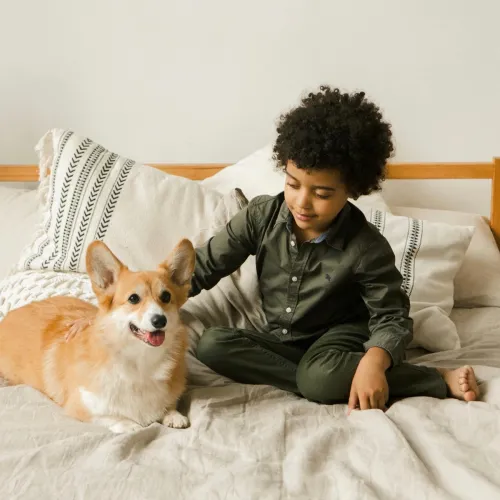
Pet custody matters because a pet is often one of the few constants in a child’s life during divorce, even though most courts still treat pets as property. Many kids view them as part of the family.

“Pet co-owners may stop loving each other at some point, but they never stop loving their pet,” says Brian Black, veterinarian and former Medical Director of Norfolk Society for the Prevention of Cruelty to Animals (SPCA).
Tamsen Thorpe agrees. As a psychologist specializing in divorce-related family dynamics in the era of telehealth, she has seen children interact with their pets during virtual sessions. “Often, the presence of an animal helps the child feel more relaxed, leading to more open and natural conversations,” she explains. “Children often speak about their pets with deep affection, finding in them a source of emotional support that is especially crucial during times of parental conflict and the transitions between two homes.”

Dr. Black reminds us that pets are living creatures with emotional attachments to their people, not just assets in the divorce. Being separated from those people can be very upsetting to a pet.
Most importantly, Dr. Black says, “Children going through divorce often look to their pet as a way to cope with big feelings and changes in their lives. The pet may be one of the few sources of stability.”
Who should the pet live with after divorce?
The pet should usually live where its own needs and the children’s bond are best met, which means weighing the pet’s attachments alongside the kids’ schedule. Deciding which home keeps the dog gets complicated because the child no longer lives in one home.
“Keep the well-being of the pets in the forefront of your negotiations,” says Karis Nafte, pet custody mediator and dog behaviour consultant. Decide what you want, regarding the pet, early in your divorce, so you can keep it in mind during negotiations.

One thing to consider is the relationship between the pet and the child. “If a dog is very attached to the children, it can work very well for dogs to move back and forth between homes with them,” says Nafte. It also benefits the child to have a constant presence of love and support even as their lives feel less stable.
Thorpe says, “For some families, allowing the pet to travel with the child offers a dependable emotional anchor, something familiar in both environments.”
“Pets offer consistent comfort and stability, especially when a child feels caught between parents or exposed to conflict,” says Thorpe. “Physical interactions (like petting or cuddling) can help lower cortisol and increase oxytocin, promoting a calmer and more positive emotional state. Given the growing mental health challenges faced by many children and adolescents today, this kind of support is incredibly valuable.”
Plus, Thorpe adds, “Caring for a pet can [even] give children a much-needed sense of control and responsibility at a time when so much feels beyond their influence.”
Thorpe continues, “It’s also important to acknowledge that pets can become symbolic within these family dynamics, representing control, loyalty, or loss. Disputes over who gets to keep or care for the pet may reflect deeper emotional struggles between parents or in the child’s inner world. For this reason, parents should stay mindful of these dynamics. What seems like a logistical concern (like ‘who walks the dog’) might actually be about a child’s underlying sadness, fear, or need for security.”
Even if the child loves the dog, however, “If the dog is strongly bonded to one of the parents, it is more fair for that dog to live full time with that person,” says Nafte. She suggests that the other parent could get a new pet so the children have a pet in both homes.
“Parents can help by involving children in age-appropriate decisions about pet care, offering them a sense of agency and stability,” says Thorpe. “Checking in gently about how the child feels regarding the pet, especially during transitions, can uncover important emotional insights. Listening without judgment and validating those feelings helps children feel safe, understood, and emotionally supported.”
What to consider for dog custody
“There is no one-size-fits-all dog custody arrangement,” says Dr. Black. “Each dog needs to be looked at individually; the dog’s breed, temperament, age, health, and size need to be taken into consideration, along with the living arrangements post-divorce/separation.” Pets are not as complex as children, but they’re not simple, either.
Shared pet custody is generally healthy for the child. Having their beloved pet can help with loneliness, emotional development, and painful feelings. “Pets serve as safe outlets for expressing difficult emotions such as grief, anger, or confusion,” says Thorpe. “Pets can provide a nonjudgmental presence when children need reassurance most. They also reinforce a sense of being needed, loved, and supported, which can significantly boost self-esteem and emotional resilience.”
However, making the dog miserable isn’t good for the child. If the child loves the dog, they will suffer by seeing the dog suffer.
“Shared dog custody is most likely to be successful with younger, easy-going, very well-adjusted dogs and amicable co-owners. There's a lot of variation in how dogs react to change. Not all dogs adjust well to shared custody,” warns Dr. Black.
“Some dogs can settle in without any issues to a life split between two homes, but not always. For many dogs, it is a stressful way to live and not ideal for them.”
One sign of distress in a dog is weight loss, explains Dr. Black. If Fido is so upset he can’t eat, then it’s hard for him to stay healthy. That said, weight loss can have many causes. It’s worth a conversation with your co-parent to find out whether Fido is eating enough or exercising more than usual.
“Most likely both co-owners care about the dog's welfare,” says Dr. Black. “So it might be a good common ground where you can have positive communication.”
What to consider for cat custody
Cats can experience stress reactions like dogs, but they’re even more likely to become distressed. “Almost all cats handle stressful situations poorly,” explains Dr. Black. “They’re particularly susceptible to social stresses. Expect your cat to not handle a divorce well, and monitor them closely.”
Dr. Black always asks about changes in the home environment when he sees a sick cat. Here are some of the signs of distress in a cat:
- Upper respiratory tract symptoms
- Symptoms of urinary tract infection
- Pulling out their hair
- According to the Cornell Feline Health Center, stress seems to be an important factor in feline idiopathic cystitis, a common bladder condition, but have your vet rule out other causes first.
If your cat shows these symptoms, consider switching from shared custody to sole custody, so the cat can have a calmer, more consistent home base. Your child will get more comfort from a happy, thriving pet.
The pet’s best interests
In most states, a pet is still treated as property, the same as your house, cars and investments. But according to the Animal Legal Defense Fund, at least nine jurisdictions (Alaska, California, Delaware, Illinois, Maine, New Hampshire, New York, Rhode Island and Washington, DC) now let judges consider an animal’s care or wellbeing when deciding who keeps it. The wording varies: New York courts must consider the “best interest of such animal,” while California judges may consider “the care of the pet animal.”
According to Modern Family Law, a California family law firm, judges there may consider factors like these in pet custody:
- Who was the primary caregiver?
- Who can afford to take care of the pet?
- Which parent’s living situation is most appropriate for this kind of pet?
- Who is most emotionally attached to the pet?
- Other factors that affect the pet’s wellbeing
Each case is unique, but these factors guide the judge as they make this big decision.
Maine’s law goes further for families: Judges there weigh “the emotional attachment of any child in the household to the companion animal,” though the pet is awarded to only one party.
Most of these laws apply only to married couples in a divorce or legal separation. Illinois has passed a law that will let courts consider a companion animal’s wellbeing even for unmarried partners starting January 1, 2027. Laws vary by state, so if you feel like it’s necessary in your situation, talk to your family law attorney for advice and next steps.
What is the difference between shared custody, sole custody, and no custody for pets?
These are your three choices when it comes to pet custody: You and your co-parent can share the pet, one of you can keep the pet permanently, or you can give up the pet (not recommended).
Shared pet custody schedule
In shared custody, the pet follows the children’s schedule. If the children have a 2-2-3 custody pattern, so does the puppy. A 2-2-3 schedule is a 50/50 split that moves the child between homes several times a week.
If Ella is with one parent Monday and Tuesday, the other parent Wednesday and Thursday, and back for the weekend, the dog makes each of those trips too. That’s a lot of transitions for an animal that craves normalcy.
If the kids follow alternating weeks, so does the kitten. Fewer exchanges can mean less coordination between co-parents who struggle to communicate, but it also means a long stretch without the other owner, which can be hard if the pet prefers one parent.
“While it may initially seem like a wonderful compromise or the most fair solution to simply share a dog,” says Nafte, “from the point of view of the dogs themselves, shared custody needs to be considered very carefully. Moving between homes can be very stressful for dogs, especially if they are strongly bonded to one person.”
To handle this situation in a fair way (fair to all the humans and the pet), “I suggest a trial period of around six months for shared custody,” says Nafte. “During this time, observe the dog's behavior closely. Are they happy with the transitions, simply tolerating the routine, or have they become stressed or anxious?” The trial period will help you figure out what living situation is best for your dog.
In addition to the logistical challenges of shared pet custody, it’s important to talk openly about the financial side of pet care. “As many of us know, animals can be expensive; the vet bills, grooming, food, medications, training, walking services, and emergency care can all add up quickly,” says Thorpe. “Negotiating upfront who will cover which expenses, or whether costs will be split, is an important part of any shared arrangement.”
Without a clear agreement, financial misunderstandings can easily become a source of conflict down the line. Every shared pet arrangement needs a written plan, ideally built into your parenting plan, that spells out the schedule, who pays which pet expenses, and who makes vet decisions. The OurFamilyWizard Expenses feature keeps those shared pet costs and reimbursements in one place.
OurFamilyWizard’s Info Bank is another invaluable tool to store and share important pet-related records like vaccination history, license, microchip info, vet contact details, and care instructions. This ensures both parties have consistent access to important info which help provide appropriate care and love to the pet.
Sole pet custody
In sole custody, a pet stays with one parent full time. Sometimes, that’s the best choice for everyone, especially if shared custody isn’t the right option.
Dr. Black explains that sole custody is often best because shared custody doesn’t always work: “In cases where the dog is securely attached and bonded to one family member, suddenly taking them away can be devastating. In these situations, a shared custody arrangement could result in harm to the dog.”
Instead, consider sole custody. If you get full custody, consider letting your co-parent pet or play with the pup when they pick up the kids (if it’s safe and healthy for everyone involved). If you don’t get full custody, keep in mind that you want what’s best for the pet.
No pet custody
If the parents agree that no one should have (or no one wants) the dog, they sometimes surrender their pet to the animal shelter. That’s the outcome that’s hardest on the pet. Even if it seems fair to the parents (“If I can’t have him, neither can you!”), the pet loses everyone it knows at once.
“I've worked in several shelters,” says Dr. Black, “and have seen dogs completely give up after losing the person that cared for them. They may have spent their whole lives on that person's lap and ate whatever their person ate off of his/her plate. Once placed in a cage in a room full of barking dogs with dry kibble as their only food source, they can become depressed and go downhill very fast.”
But the true nightmare scenario, Dr. Black explains, “is having a pet owner seek to inflict pain by requesting to have an animal euthanized.”
Pet custody conflict after the decision
Conflict over a pet can continue after the custody decision, often through vet records, microchips or medical choices made without the other owner. Your co-parent “could also do things like declawing a cat when the other party is against it, or having a microchip implanted linked to their contact information, and the veterinarian would have no reason to believe that anything was amiss.”
If you worry that your co-parent would do something like that, call your vet and warn them. If you have full custody of the pet, ask your vet to add a note to your pet’s file and to take your co-parent off the account.
“Veterinarians and their staff are not used to dealing with pet custody,” adds Dr. Black, “so don't assume they will know when to refuse services.”
When to seek legal guidance for pet custody
If your pet is being used as a power play, or is caught in the middle, that’s a good time to seek legal guidance, says pet custody mediator Nafte. “Subtly or overtly, if you think your ex is not considering what is best for the dog but is making decisions out of anger or unable to be rational, consider getting legal guidance to protect them.”
Animal abuse, or even “a threat to abuse an animal as a way to coerce a partner to stay in the relationship,” is a good reason to talk to your lawyer. “Animals, sadly, often get used in divorce to hurt an ex-partner.”
However, keep this in mind: “We never tell our clients what to do about pet custody,” says Amanda Trigg, a family law attorney with over 30 years of experience. “It’s a personal decision.”

In fact, Trigg explains, pet custody cases rarely go before a judge. They’re usually worked out in mediation, and that’s what you want. Judges generally don’t look favorably on pet custody disputes. They’re much more concerned with child custody, and might not appreciate a distraction.
Bring up the pet custody issue very early in your negotiations in mediation, suggests Trigg. In her experience, people often spring it on the mediator at the end, when it’s a lot harder to find other compromises to make room for the dog decision.
“Do your utmost to make a plan for the dog between you and your ex,” suggests Nafte, “rather than heading to court where a judge will have no choice but to decide for you.”
Some couples also sign a prenuptial agreement about their pet. According to the Animal Legal & Historical Center at Michigan State University College of Law, a “pup nup” is a contract couples can use to write out what will happen with their pets if they split.
To prepare for a pet custody battle, keep careful documentation: What and when you feed your pet, when you take walks or take them to the dog park, when you take them to the vet, when you administer medicine, and anything else you do to care for your pet. OurFamilyWizard’s Journal feature is a great tool for tracking and storing this kind of information. It allows you to document daily activities, expenses, and care details in a secure, time-stamped format that can be helpful if the issue ever goes to court.
If you feel like that’s necessary in your situation, talk to your family law attorney for advice and next steps.
Pet custody that puts your pet and kids first
The best pet custody plan is the one your pet can thrive in, because a calm, healthy pet gives your children more comfort than a pet stretched between two homes. Whether that means shared custody, sole custody, or another creative arrangement, the goal is to keep things as stress-free as possible for both the pet and the kids.
By keeping an open mind, working together, and focusing on what’s best for the pet, co-parents can come up with a plan that keeps everyone happy. Write that plan into your agreement, and track your pet’s care and shared costs in OurFamilyWizard so both homes stay on the same page.
Pet custody FAQ
Who gets the family pet in a divorce?
Most states still treat a pet as property, but at least nine jurisdictions let judges weigh the animal’s care or well-being when deciding who keeps it. Family law attorney Amanda Trigg says most pet custody cases are worked out in mediation rather than before a judge.
Is shared custody good for dogs?
Dr. Black says shared custody is most likely to work for younger, easygoing dogs with cooperative co-parents. Nafte suggests a six-month trial period to see whether your dog is happy, just tolerating the routine or stressed.
Do pet custody laws apply if we were never married?
Most state pet custody laws cover only divorce and legal separation. Illinois has passed a law for unmarried partners that takes effect January 1, 2027.
Can a pet prenup (or "pup nup") decide who keeps the pet?
A “pup nup” is a contract that spells out what happens to your pet if you split, but how much weight it carries can vary by state. Talk to your family law attorney about whether one makes sense for your family.